About Us
Who We Are
Global Agenda Achievers Services (GAAS Africa) is a non-profit organization rooted in the belief that a better future for humanity and the environment is possible through collective effort and innovation. We are a diverse team of passionate individuals committed to driving positive change in communities across Africa.
Global Agenda Achievers Services – Africa, also known as GAAS AFRICA, is an innovation and socioeconomic development consortium that aims at introducing or generating ideas, items and systems to support the socioeconomic development programs and policies of Africa governments and institutions.
GAAS Africa is an organization of socio-economic, scientific and technological development practitioners who love to see Africa contribute adequately to the mainstream of global development and civilization by compelling the masses to participate in Global Agendas or Visions.
Global Agenda Achievers Services – Africa

Advancing the United Nations Sustainable Development Goals in African communities.
What We Do
Our work is organised around two connected areas of progress – social development and environmental progress – because neither can be sustained without the other.
Social Development
Education and Empowerment
We create and support educational initiatives that empower individuals and communities, ensuring access to quality education and skills training.
Health and Well-being
We promote health and wellness through healthcare initiatives, access to clean water, and sanitation projects.
Economic Development
We facilitate programs that boost local economies, providing resources and training to help individuals create sustainable livelihoods.
Environmental Progress
Conservation Projects
We implement projects aimed at preserving natural habitats and protecting endangered species.
Sustainable Practices
We promote sustainable agricultural practices and renewable energy solutions to reduce environmental impact and foster a greener future.
Community Involvement
We engage communities in environmental education and activities that promote environmental stewardship and awareness.
Our Focus on Africa
Africa, with its rich cultural heritage and biodiversity, faces unique social and environmental challenges. At GAAS Africa, we are dedicated to addressing these challenges through tailored programs and initiatives that leverage local knowledge and expertise.
Explore Our Programs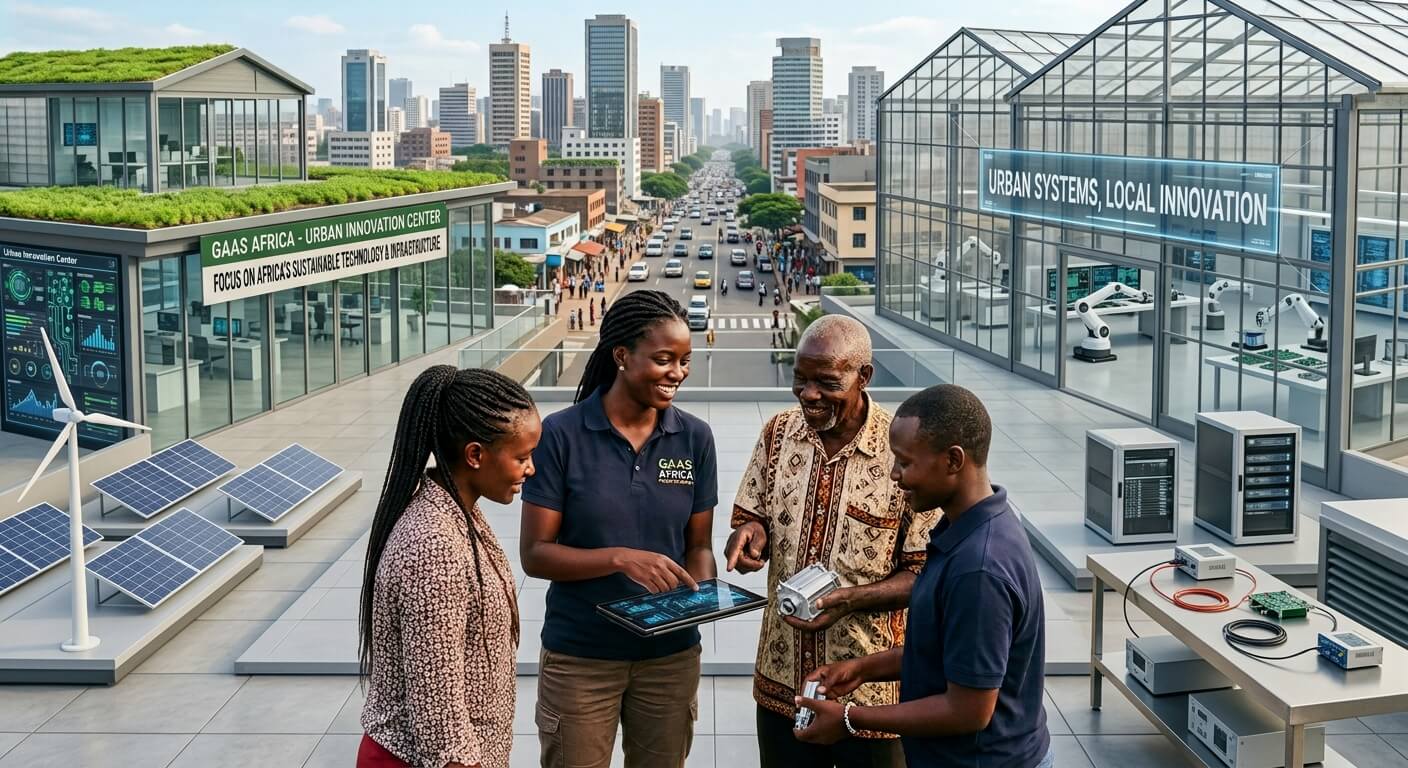
GAAS AFRICA started based on the motivation to see African Government, Institutions and Individuals actively participating in Global Agendas.
It is obvious and accepted that our modern civilization operates in a global village. Therefore, almost every activity on the planet is almost a global practice with global effects. This is the reason why many leaders have joined the circus of dealing with national agendas through the spectrum of global agendas.
Many are the global visions, goals or agendas that contribute to a nation's development. However, this modern strategy is less adopted in Africa, since many African countries have great concerns for national agendas without much concern for achievement of the global agendas.
The following are the factors that motivate GAAS AFRICA to be concerned with global agendas in Africa:
-

The Weight of Global Agenda:
Global agendas are always weighty to be carried by the few interested persons in the world. Participation of global agendas by the masses does not always have a good report as far as number is concerned. Thus there are always few people in Africa who deliberately and willingly accept to promote global visions with their skills and resources. This is the main reason why the achievements of global visions or goals always become difficult to achieve in Africa. If the individuals, groups and institutions as well as governments seriously partake in global visions the world and the countries in Africa will be better. In respect of this GAAS AFRICA was formed to add up to the existing forces on whose shoulders rest the load of global agendas. Above all, the ideal objective of GAAS Africa is to compel the individuals, groups, institutions and governments who don't have the urge to partake in global agendas to join the exercises.
-
The Less Popularity of Global Agendas in Africa:
Despite the fact that environmental degradation, global warming, unemployment, water and sanitation issues affect Africans severely, such issues are tackled as only national problems with limited national approach. People do not know the global relationship of their causes and effects. Presently only few people in Africa and other developing countries know something about the Sustainable Development Goals of the United Nations.
The SDGs for example, are not popular in Africa (despite the fact that all of Africa's problems are captured in the Sustainable Development Goals). It is obvious that most of the problems of Africa are already captured by the Sustainable Developments Goals and for that matter national solutions can be made with global instruments and provisions as long as we live in a global village.
A high school student in Africa can mention the names of all the football clubs in England, Italy and Spain but may not know just one of the seventeen Sustainable Development Goals. This is not as a result of poor education but lack of popularity of global issues in Africa and its related education, awareness or publicity. GAAS Africa believes that creating awareness must take a different height or model that will not only give information to the masses but also compel them to participate in the agenda's achievement.
-
The Imbalance between National Agendas and Global Agendas:
There is always a form of imbalance between national and global policies in developing countries especially Africa. No matter how global visions are designed to be a benefit to such countries it becomes difficult for them to apply due to how their national ideals do not move in line with the global agendas. This is not to suggest that African policies are poor, but rather to be bold on the fact that Africa government policies are very limited to relative national demands of a particular moment, time, period or season.
Perhaps this is not a deliberate act on the side of governments of developing countries but rather the difficulty in merging the two visions (national visions and global visions). This is because global visions are designed to make developing countries obtain the status of developed countries, without the provision of a uniform model to achieve the target. For this reason, GAAS Africa has the burden of studying national policies and integrating them to fulfil global agenda. This can be done when the daily activities of individuals are partially altered positively with the colour of global elements to fulfil national mandates or targets.
-
The Willingness of the Masses to Engage the Global Vision:
GAAS Africa has identified that the Africa masses are eager to join the global exercise at all cost. The only problem is that they have not been given the chance by both the government and the global target setters. This is because the model of awareness and the means of compelling the masses to join the global exercises are always disconnected or disjointed. For example, in Africa people know how poor sanitation affects them so much and they are ever ready to deal with it, but unfortunately they don't know how and where to start. GAAS Africa believes that it is the masses that can solve their own problem only if they are educated much on the solution than the problem itself. For this reason GAAS Africa accepts the mandate of building solutions in the minds and activities of the masses so that every work of an individual or a group contributes to the achievement of the global visions for the benefits of the country.
-
The Carelessness of Governments and Public Administrators of Developing Countries:
There are many people in developing countries who do not know the benefits of a country's membership to global or international communities like ECOWAS, the Africa Union, the United Nations, etc. Many governments and institutions in developing countries detest accountability and for that matter do not want to educate the masses on global visions. The truth is that global visions come with benefits to participating member states. But since citizens are less educated or informed on global goals, resources for its achievement are often not utilized for mass benefits due to corruption in public offices. GAAS Africa has the passion to stop this bad act by putting pressure on such institutions responsible for creating awareness, offering assistance and providing solutions about global agendas to deliver what is expected of them.
-
The Agreement of Individual Skills and Professions:
GAAS Africa believes it takes the agreement of individual skills and professions to achieve the global agendas. The issues of global visions are issues of global civilization. Civilization breeds different skills; whilst different skills contribute to the progress of civilization. Therefore, to address the problems of humanity is synonymous to addressing the problems of civilization. As a result, there is a call on the general contribution of all skills of human civilization to support the agenda. This is what we believe and quest for by inviting experts, service providers and volunteers around the solutions of common problems.
-
The Love to Support Individuals and the Masses:
GAAS Africa has the passion to see happiness among humanity. GAAS Africa loves to see the sick, poor, young, old, rich and healthy as happy people whereby there exists a harmonious relationship between humanity and the environment. We live on a continuously degenerating planet which reveals different threats to our lives and other biological species. As long as we are part of nature, we cannot be exempted from the damage we cause to nature. To have the passion for making humanity better is inseparable from the compassion of making our environment better. This is the major reason why GAAS Africa is deeply interested in introducing concepts, programs and projects to support African government with the indigene and environment's development as the fulcrum on which every activity of development must revolve.